

2026 Chevrolet Silverado EV nearby Northfield, MN
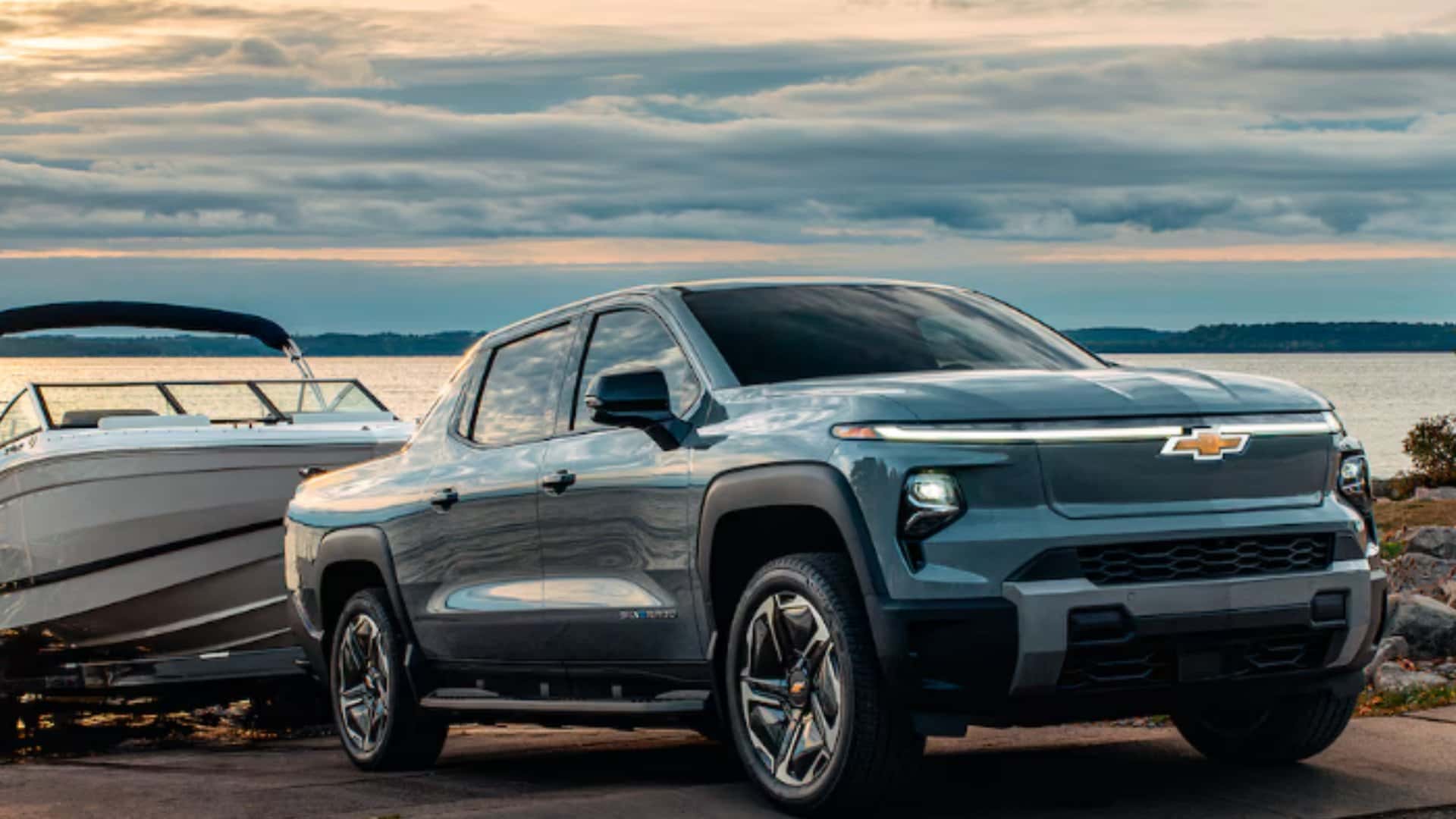
The 2026 Chevrolet Silverado EV is a battery-electric pickup available in Work Truck, LT, and Trail Boss configurations. Its dual-motor electronic four-wheel-drive system combines electric propulsion with Performance Torque Vectoring, while three available battery sizes support distinct output, range, and charging capabilities. The expanded lineup includes the Trail Boss, which adds a lifted suspension, specialized drive modes, all-terrain tires, and model-specific equipment for off-road operation. Every configuration also provides regenerative braking, four-wheel independent suspension, generous passenger dimensions, and functional cargo solutions. This technical overview examines the propulsion system, battery range, charging performance, chassis engineering, Trail Boss hardware, interior technology, driver-assistance systems, dimensions, towing capability, and cargo utility of the 2026 Chevrolet Silverado EV.
Electric Performance, Battery Range, and Charging
The 2026 Chevrolet Silverado EV uses a rechargeable energy storage system composed of multiple linked modules. Chevrolet offers Standard, Extended, and Max battery packs, although battery availability varies by trim. The Work Truck and LT models offer all three battery choices, while the Trail Boss is available with Extended and Max batteries. Every configuration uses two motors, consisting of one front and one rear electric drive unit, to provide electronic four-wheel drive. Output, estimated driving range, and maximum charging rate depend on the selected trim and battery configuration.
Dual-Motor Power and Torque
Work Truck models produce 510 horsepower with each of the three available battery packs. Torque measures 490 lb-ft with the Standard battery and increases to 580 lb-ft with the Extended or Max battery. The LT develops 605 horsepower and 605 lb-ft of torque with the Standard battery, while the Extended battery raises output to 645 horsepower and 765 lb-ft. An LT equipped with the Max battery can produce 760 horsepower and 765 lb-ft of torque. Trail Boss output reaches 625 horsepower and 775 lb-ft with the Extended battery or 725 horsepower and 775 lb-ft with the Max battery, with maximum Trail Boss output available through Wide Open Watts mode.
The dual-motor arrangement distributes propulsion through front and rear drive units instead of relying on a single electric motor. Electronic four-wheel drive works with Performance Torque Vectoring to manage power delivery according to the truck’s operating conditions. The different output levels allow each trim and battery combination to maintain a clearly defined technical specification. Wide Open Watts mode gives supported LT and Trail Boss configurations access to their maximum available horsepower and torque. Drivers can therefore select a 2026 Chevrolet Silverado EV configuration according to its documented balance of power, battery capacity, and intended function.
Driving Range by Configuration
The Work Truck provides an EPA-estimated range of 286 miles with the Standard battery, 424 miles with the Extended battery, and 493 miles with the Max battery on a full charge. The LT delivers an EPA-estimated 283 miles with the Standard battery and 410 miles with the Extended battery. With the Max battery, the LT carries a GM-estimated range of 478 miles on a full charge. Trail Boss models provide an EPA-estimated 410 miles with the Extended battery and a GM-estimated 478 miles with the Max battery. These figures show how trim equipment and battery selection affect the published range of each 2026 Chevrolet Silverado EV configuration.
Actual driving range can vary according to operating and environmental factors. Ambient temperature, terrain, battery age, battery condition, vehicle loading, driving patterns, and maintenance can all affect the distance available from a full charge. The published estimates apply to specific combinations of trim and battery equipment. Drivers should therefore evaluate both battery capacity and configuration when reviewing the 2026 Chevrolet Silverado EV lineup. The availability of Standard, Extended, and Max batteries gives Work Truck and LT customers three range categories, while the Trail Boss uses the two larger battery options.
DC Fast Charging and Level 2 Capability
Maximum charging capacity also varies with battery size. The Standard battery supports charging speeds of up to 220 kW, while the Extended battery supports up to 300 kW. The Max battery increases the supported rate to as much as 350 kW. Under appropriate conditions, available DC fast charging at up to 350 kW can add a GM-estimated 100 miles of range in 10 minutes. Charging results can vary based on the charging source, battery condition, ambient temperature, and other operating factors.
Level 2 charging at 240 volts supports up to 19.2 kW and 80 amps when the truck is paired with a PowerShift or PowerUp+ charger. That arrangement can add an estimated 37 miles of range per hour. The charging unit’s output, the vehicle’s settings, and the outside temperature can affect the achieved charging rate. These capabilities give the 2026 Chevrolet Silverado EV separate charging solutions for compatible DC fast-charging stations and 240-volt equipment. Battery selection remains important because each battery category has a different maximum supported DC charging speed.
Disclaimer: 2026 Silverado EV Max Range Trail Boss or Max Range LT. GM-estimated on a full charge. Actual range may vary based on several factors, including ambient temperature, terrain, battery age and condition, loading, and how you use and maintain your vehicle.
Chassis, Steering, Braking, and Trail Boss Engineering
The 2026 Chevrolet Silverado EV employs a four-wheel independent suspension designed to support ride control and handling across its available configurations. Column-mounted electric power steering provides steering assistance, while available four-wheel steering contributes to low-speed maneuverability. The braking system combines conventional friction brakes with regenerative braking capability. Front and rear sliding-caliper disc brakes use Duralife™ rotors, and four-wheel antilock braking operates with 14-inch front and rear rotors. Together, these systems coordinate electric propulsion, steering, suspension, and braking functions for daily driving, trailering, maneuvering, and supported off-road operation.
Trail Boss Suspension and Ground Clearance
The 2026 Chevrolet Silverado EV Trail Boss receives a 2-inch lift that provides 24 percent more ground clearance than the standard 2026 Chevrolet Silverado EV ride height. Its uniquely tuned coil suspension incorporates a hydraulic rebound control system. Published ground clearance measures 205 mm for the Work Truck, 209 mm for the LT, and 255 mm for the Trail Boss. The Trail Boss also has a 31.6-degree approach angle, a 25.1-degree departure angle, and a 19.2-degree breakover angle. These measurements document the effect of its lifted chassis, high-angle-approach front fascia, and model-specific suspension tuning.
The additional clearance helps the Trail Boss move over uneven surfaces while maintaining space beneath the vehicle. Its approach, departure, and breakover angles define the body and chassis geometry relevant to changes in surface elevation. Hydraulic rebound control forms part of the trim’s specialized coil-suspension tuning. The 255 mm ground-clearance measurement also distinguishes the Trail Boss from the Work Truck and LT configurations. Chevrolet combines these chassis changes with dedicated tires, drive modes, tow hooks, and exterior equipment to create the Trail Boss package.
Terrain Mode, Sidewinder, and Four-Wheel Steering
A Trail Boss-exclusive Terrain mode operates at low speeds and provides additional control as the truck moves across uneven areas. Compared with Normal mode, Terrain mode enables sharper four-wheel-steering response and gives the driver greater control over torque and traction at low speeds. The Trail Boss also includes an off-road mode and Sidewinder mode. Sidewinder turns all four wheels in the same direction, allowing the truck to travel diagonally at low speeds. This function can assist when negotiating rugged terrain or confined parking spaces.
The driver selects Sidewinder through the center infotainment display, and the feature remains limited to low-speed operation. Four-wheel steering also contributes to the Trail Boss model’s 42.2-foot turning circle. Terrain mode changes the steering response and low-speed torque characteristics for controlled travel across uneven surfaces. Sidewinder uses the same four-wheel-steering hardware in a different operating pattern by aligning the front and rear wheels in the same direction. These systems expand the functional role of the available four-wheel steering beyond conventional turning assistance.
Wheels, Tires, and Braking Hardware
The Work Truck and LT come standard with 18-inch wheels fitted with LT265/70R18 all-season blackwall tires. The LT can also be equipped with available 22-inch wheels and LT275/50R22 all-season blackwall tires. Trail Boss models use distinctive 18-inch wheels with 35-inch LT285/75R18 all-terrain blackwall tires. The larger all-terrain tires complement the Trail Boss model’s lifted suspension and off-road-focused equipment. Wheel and tire specifications therefore vary according to trim function and available equipment.
Across the lineup, regenerative braking works with the four-wheel disc brakes, Duralife™ rotors, and four-wheel antilock braking system. Regenerative capability allows the electric drive system to participate in vehicle deceleration. The friction-braking hardware uses sliding calipers at the front and rear. Both axles receive 14-inch brake rotors, providing consistent published rotor dimensions throughout the system. This combination integrates electric-energy recovery with conventional hydraulic braking hardware and antilock control.
Design, Dimensions, and Functional Utility
The Trail Boss adds functional body and equipment changes that distinguish it from the Work Truck and LT. Its high-angle-approach front fascia complements the increased ride height and published approach angle. Red front tow hooks, exterior badging, a unique interior, all-terrain tires, and exclusive wheel designs further identify the trim. Accessible auxiliary switches support the installation and control of equipment such as accessory lighting. The 2026 Chevrolet Silverado EV exterior-color range includes nine choices, with White Sands, Polar White Tricoat, and Magnus Gray Matte Metallic among the available selections.
Exterior and Passenger Dimensions
Every 2026 Chevrolet Silverado EV has a 145.7-inch wheelbase and an overall length of 233.1 inches. Work Truck height measures 78.0 inches, LT height measures 78.1 inches, and Trail Boss height reaches 79.9 inches. Overall width varies according to trim and mirror configuration, reaching 95.6 inches for the Trail Boss with mirrors and 94.3 inches for Work Truck and LT models with mirrors. The front overhang measures 36.2 inches, while the rear overhang measures 51.2 inches. Track width ranges from 68.5 to 68.9 inches depending on the trim and axle position.
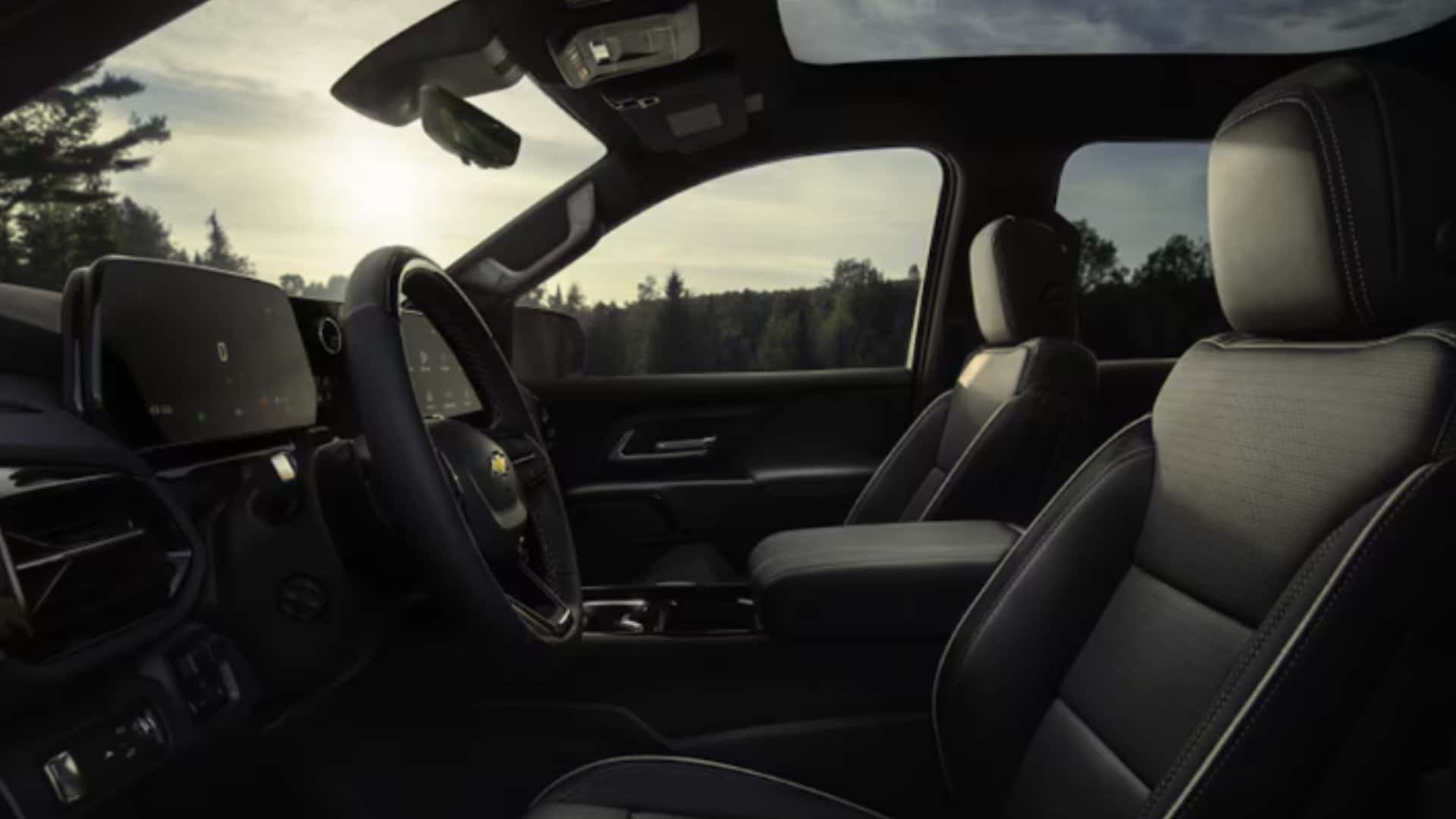
The cabin provides 44.8 inches of maximum front legroom and 44.3 inches of maximum rear legroom. Front shoulder room measures 64.9 inches, while rear shoulder room measures 63.8 inches. Front and rear hip room measures 62.0 and 61.4 inches, respectively. Maximum headroom varies by configuration, with published front measurements ranging from 41.9 to 43.9 inches and rear measurements ranging from 38.7 to 39.7 inches. These dimensions define the allocation of passenger space within the two-row cabin of the 2026 Chevrolet Silverado EV.
Cargo Space and Configurable Storage
Cargo-box volume measures 57.3 cubic feet in Work Truck and 2LT configurations. The 3LT and Trail Boss provide 57.5 cubic feet of cargo-box volume. An additional eTrunk™ supplies 10.7 cubic feet of enclosed storage at the front of the vehicle. The Multi-Flex Midgate is available on LT and Trail Boss models, providing another method of configuring the relationship between the passenger compartment and cargo area. These features combine an open cargo bed, enclosed front storage, and available configurable cargo access.
The differences in cargo-box volume reflect the applicable trim configuration. The eTrunk™ offers storage that remains separate from the main bed, adding another usable cargo area to every supported configuration. The available Multi-Flex Midgate expands the ways LT and Trail Boss owners can arrange the interior and bed boundary. Its availability depends on trim rather than battery selection alone. Together, the bed, eTrunk™, and available midgate support cargo with different dimensions and storage requirements.
Off-Board Power, Towing, and Payload
Up to 10.2 kW of off-board power is available on every trim. This capability allows the truck’s electrical system to supply compatible external equipment. Its availability across Work Truck, LT, and Trail Boss configurations makes off-board power a lineup-wide functional attribute. Actual use depends on the installed equipment and the requirements of the connected devices. The system adds an external-power function alongside the truck’s propulsion, charging, cargo, and towing capabilities.
With the Extended battery, the Trail Boss offers a maximum towing capacity of 12,500 pounds and a payload capacity of 2,100 pounds. Achieving the maximum trailering figure may require optional trailering equipment. The capacity of an individual vehicle can vary according to its configuration. Passengers, cargo, accessories, and optional equipment can reduce the amount the truck can tow or carry. Drivers should follow the vehicle information and operating instructions that apply to their specific 2026 Chevrolet Silverado EV before loading or trailering.
Displays and Driver-Assistance Technology
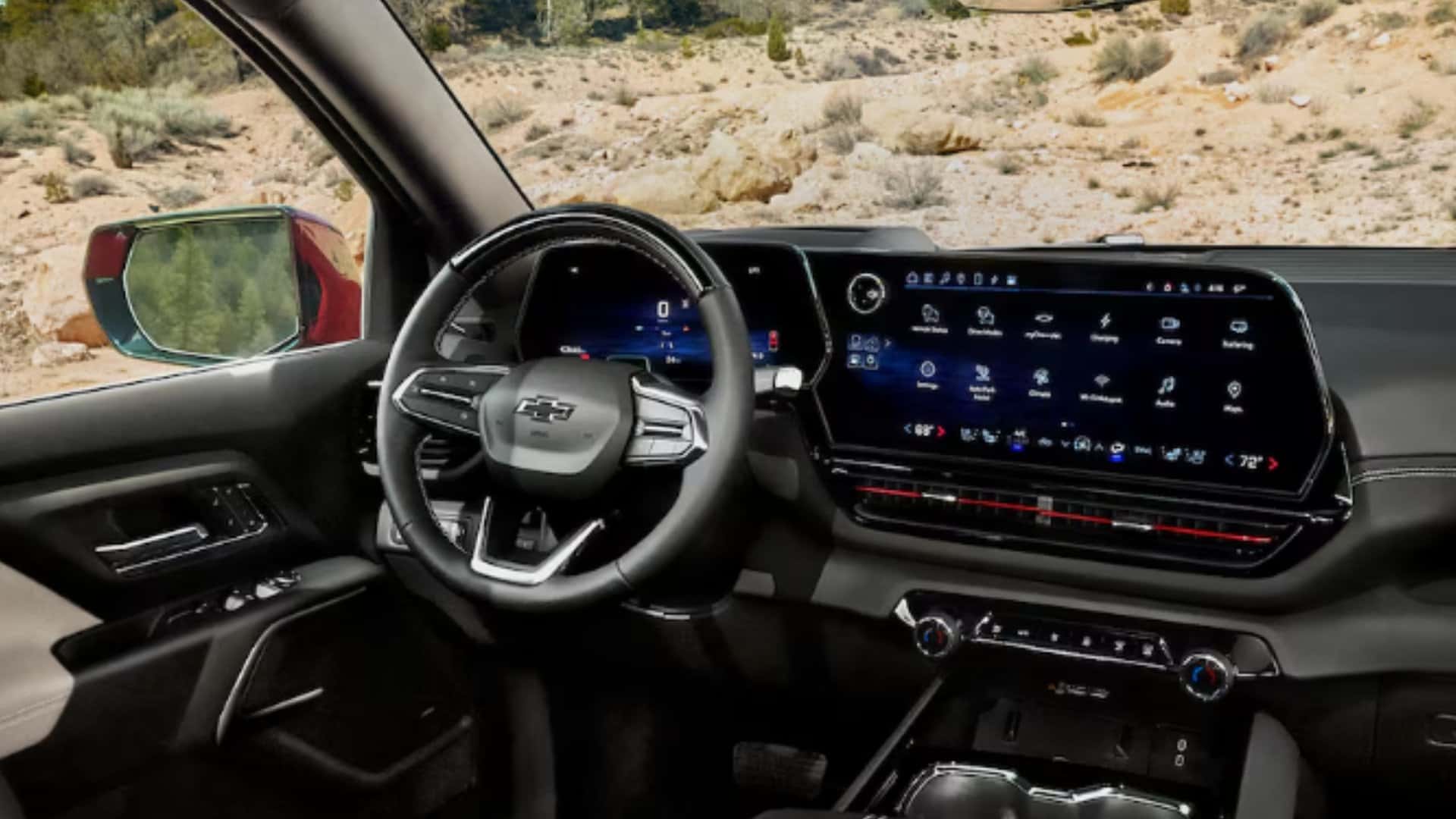
Every 2026 Chevrolet Silverado EV trim includes a 17.7-inch-diagonal center infotainment screen paired with an 11-inch-diagonal driver information center. This display arrangement is standard on the Work Truck for the first time, creating a consistent screen layout across the lineup. The center display provides access to infotainment functions and supported vehicle controls, including low-speed Sidewinder mode on the Trail Boss. LT and Trail Boss configurations also use the interface to support functions such as Wide Open Watts mode. The two digital displays organize vehicle information, entertainment features, configurable driving systems, and performance controls within the cabin.
Super Cruise® Enhancements
Available Super Cruise® enhancements include integration with Google Maps to help position the vehicle in the correct lane for a selected route while traveling on compatible roads. A hands-on function can keep the 2026 Chevrolet Silverado EV centered in its lane and adapt its speed to the vehicle ahead while the driver keeps both hands on the steering wheel. When the truck reaches a Super Cruise®-enabled road, the steering-wheel light bar turns green, and hands-free driving can engage automatically. Super Cruise® with towing is available on LT and Trail Boss models. Automatic Lane Change and Lane Change on Demand do not operate while the vehicle is trailering.
The system requires the driver to remain attentive, avoid using a handheld device, and follow all feature limitations and compatible-road requirements. Super Cruise® does not remove the driver’s responsibility to monitor traffic and surrounding conditions. Its towing availability gives properly equipped LT and Trail Boss models access to supported hands-free operation under the system’s stated conditions. The hands-on lane-centering function provides a separate form of steering and speed assistance when the driver keeps both hands on the wheel. Functionality depends on compatible roads, active services, equipped hardware, and other operating requirements.
Adaptive Cruise Control has also been updated for the 2026 Chevrolet Silverado EV. The system can allow the driver to select automatic speed adjustments that correspond with posted speed limits. This capability complements the speed adaptation provided by the hands-on lane-centering function. Both technologies assist with speed management but leave responsibility for vehicle control with the driver. Availability and operation depend on the equipped configuration, active services, road compatibility, and stated system limitations.
Schedule a Test Ride Today
Visit Sota Chevrolet nearby Northfield, MN, to examine the 2026 Chevrolet Silverado EV in Work Truck, LT, and Trail Boss configurations. Our team can help you review dual-motor performance, battery choices, charging capabilities, passenger comfort, cargo functions, and available driver-assistance technology. A test drive provides an opportunity to assess ride quality, handling, steering response, display operation, regenerative braking, and safety features from the driver’s seat. We can also explain the functional differences among the available trims and battery configurations. Contact our team to schedule a test drive and determine which 2026 Chevrolet Silverado EV configuration aligns with your performance, towing, cargo, comfort, and technology requirements.
